
Qateel Shifai : A Life Between the Ghazal and the Silver Screen
- karvaan25
- Feb 25
- 3 min read

Listen to our Spotify podcast for this episode :
https://bit.ly/40qJzkT
Video Overview
A Life Between the Ghazal and the Silver Screen :
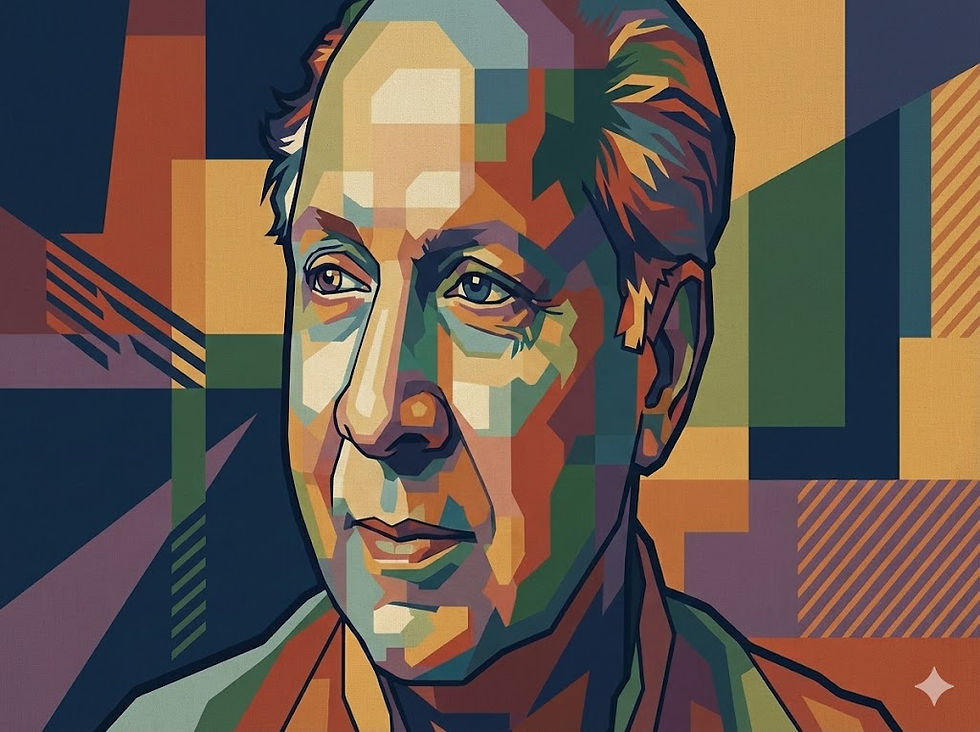
Muhammad Aurangzeb, known to the world by his takhallus Qateel Shifai, occupies a singular place in twentieth century Urdu literature. Born on 24 December 1919 in Haripur in the Hazara region, he rose from modest beginnings to become one of the most widely read poets and most prolific lyricists of his generation. His life mirrors the story of Urdu poetry itself in the modern age, negotiating the delicate passage from classical tradition to popular culture without surrendering artistic integrity.
Qateel lost his father while still young, a loss that compelled him to abandon formal education and seek employment. He experimented with small businesses and clerical work before literature became both refuge and calling. In 1938 he adopted the pen name Qateel, later adding Shifai in honour of his mentor Hakeem Muhammad Yahya Shifa Khanpuri. This act of literary self naming marked the beginning of a lifelong commitment to poetry.
The Making of a Poet
His early years in Rawalpindi and later Lahore brought him into contact with vibrant literary circles. By the mid 1940s he was associated with the respected magazine Adab e Latif, and his ghazals began to attract attention in mushairas. Lahore, newly energised after Partition, became the city where his voice matured.
Qateel Shifai’s poetry draws deeply from the classical ghazal tradition, yet it carries an unmistakable modern cadence. Love in his verse is intimate, restless and often wounded. His language is neither heavily Persianised nor artificially simple. Instead, it flows with conversational grace, which made it particularly suitable for musical adaptation.
One of his well known couplets captures the aching intensity that defines much of his work: Garmi e hasrat e nakaam se jal jaate hain Hum chiraaghon ki tarah shaam se jal jaate hain
The imagery is classical, the emotion immediate. Desire becomes flame, the self becomes a lamp, and longing consumes quietly yet persistently.
Another couplet often cited for its understated romanticism reads:
Tum poocho aur main na bataoon aise to haalaat nahin
Ek zara sa dil toota hai aur to koi baat nahin
Here the restraint is striking. The heartbreak is acknowledged almost casually, yet the simplicity deepens its poignancy.
The Poet in Cinema
What distinguishes Qateel Shifai from many of his contemporaries is the scale of his work in film. Over several decades he wrote more than two thousand songs for Pakistani and Indian cinema. His entry into films in the late 1940s opened a new chapter in Urdu literary culture. The ghazal, traditionally confined to the page and the mushaira, now travelled through radio waves and cinema halls.
Unlike some poets who felt diminished by commercial association, Qateel maintained literary dignity within popular frameworks. His film lyrics often retained the metaphoric richness of classical poetry. This ability to balance craft with accessibility ensured that his lines reached audiences far beyond literary gatherings.
Publications and Prose
Alongside his cinematic output, Qateel Shifai published more than twenty collections of poetry. These volumes trace his evolution from youthful romanticism to reflective maturity. He also wrote an autobiography titled Ghungroo Toot Gaye, offering insight into the literary and film worlds of Lahore across decades of cultural change.
His poetry has been translated into several languages, and his ghazals continue to be recited across South Asia. Even in contemporary digital spaces, his verses circulate widely, quoted in conversations about love, separation and memory.
Recognition and Legacy
Qateel Shifai received numerous honours during his lifetime, including the Pride of Performance awarded by the Government of Pakistan and multiple Nigar Awards for his contribution to film music. Yet awards alone do not define his stature. His real achievement lies in the emotional accessibility of his work.
He passed away on 11 July 2001 in Lahore, leaving behind a body of writing that bridges the classical and the modern. In him, the Urdu ghazal found a voice that could inhabit both the intimate gathering of poets and the vast auditorium of cinema.
Qateel Shifai remains a poet of feeling rather than philosophy, of lived emotion rather than abstraction. His lines endure because they speak plainly to private wounds. In that quiet, lyrical honesty lies the secret of his lasting appeal.